Best Home Water Filters in 2026: Types, Top Picks, Costs and Buying Tips
Find the right water filter for your home, understand how different systems work, and learn which features matter before spending your money.

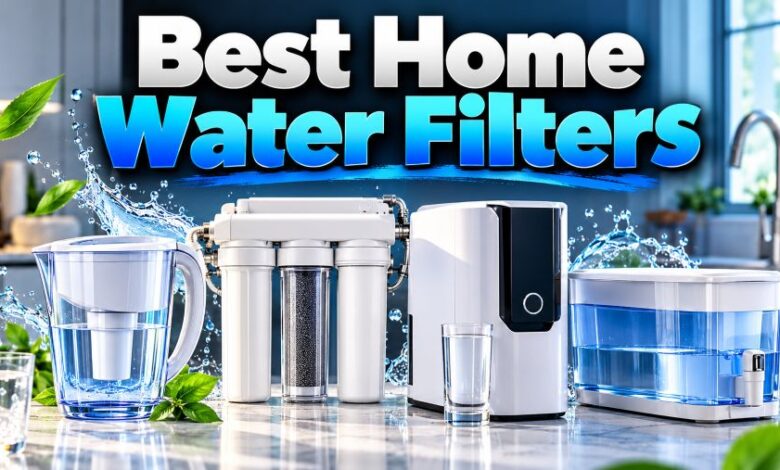
Clean drinking water matters every day. But not every tap delivers the same quality.
Some homes deal with chlorine taste. Others have sediment, hard water, or concerns about harmful chemicals.
That’s where home water filters come in.
The best home water filters can improve water taste and reduce specific contaminants. Some systems also treat water containing certain harmful microorganisms.
But here’s the catch. Every filter works differently.
A simple pitcher may be enough for treated tap water. A household with high dissolved salts might need reverse osmosis instead.
So, which one should you buy?
This article explains the main filter types, popular products, real benefits, possible drawbacks, running costs, and what to check before installation.
Quick Facts About Home Water Filters
| Feature | Details |
|---|---|
| Product category | Home water filtration |
| Main purpose | Improve water quality |
| Common filter types | Carbon, RO, UV, UF, sediment |
| Popular brands | Brita, Aquasana, AquaTru, PUR |
| Basic installation | Pitchers require no plumbing |
| Advanced installation | Under-sink and whole-house systems |
| Common concerns | Chlorine, lead, PFAS, sediment |
| Germ treatment | Requires a suitable treatment system |
| Filter replacement | Depends on model and water usage |
| Important certification | NSF/ANSI standards |
| Best buying approach | Test water before selecting treatment |
What Are Home Water Filters?
A home water filter treats water before use.
Some filters sit inside pitchers. Others connect directly to kitchen taps or the main household water line.
Their job depends on the technology.
Activated carbon can improve taste. Reverse osmosis reduces many dissolved substances.
Specialist equipment can address certain bacteria, viruses, minerals, or unwanted chemicals.
Still, no single device removes everything.
That’s why understanding your water supply matters more than choosing the most expensive product.
Best Home Water Filters Worth Considering in 2026
Several established brands offer different filtration options.
Good Housekeeping’s August 2026 testing highlighted products from Aquasana, Brita, AquaTru, and PUR.
Each serves a different purpose.
1. Aquasana 3-Stage Max Flow – Best Under-Sink Choice
Aquasana offers a three-stage under-sink filtration system.
It connects beneath the kitchen sink and delivers filtered water through a separate drinking-water faucet.
The system uses several filtration stages.
According to Good Housekeeping’s 2026 review, it carries certified reduction claims covering numerous contaminants, including lead and certain PFAS.
Main benefits:
- Suitable for everyday drinking water.
- No pitcher refilling needed.
- Designed for convenient kitchen use.
- Filters can last up to six months.
Possible drawbacks:
Installation may require plumbing changes.
Replacement cartridges also add to yearly costs.
This model makes sense for households wanting filtered water directly from the kitchen sink.
2. Brita Everyday Pitcher with Elite Filter – Best Budget Option
Not everyone needs plumbing work.
A filter pitcher offers a simpler approach.
The Brita Everyday pitcher holds up to ten cups of water and works without electricity.
Its Elite cartridge has certified reduction claims for numerous contaminants.
That makes it more capable than a basic taste-only filter.
Main benefits:
- No permanent installation.
- Easy to refill.
- Convenient for smaller households.
- Replacement cartridges are available.
Possible drawbacks:
The pitcher needs regular cleaning.
Its capacity may feel limited in a busy home.
The Elite cartridge also differs from Brita’s basic filter. Buyers should check which cartridge is included.
3. AquaTru Countertop Water Purifier – Best Countertop RO Choice
AquaTru uses reverse osmosis technology.
The countertop system treats water without requiring a typical under-sink plumbing installation.
Its filtration process includes multiple stages.
Good Housekeeping reports that the reviewed system has certifications covering more than 80 contaminants.
These include certain heavy metals and organic chemicals.
Main benefits:
- Reverse osmosis treatment.
- No permanent under-sink setup.
- Suitable for homes with limited plumbing options.
- Broad certified contaminant-reduction claims.
Possible drawbacks:
The unit needs counter space.
It also produces wastewater that must be emptied.
The initial purchase cost is higher than a standard pitcher.
4. PUR Plus 30-Cup Dispenser – Best Large-Capacity Option
Some households use plenty of drinking water.
Repeatedly filling a small pitcher gets annoying.
The PUR Plus 30-Cup dispenser offers a larger reservoir.
It can sit on a suitable countertop or refrigerator shelf.
Its filtration performance depends on the fitted cartridge.
Main benefits:
- Large water capacity.
- No plumbing installation.
- Convenient dispensing.
- Suitable for frequent drinking-water use.
Possible drawbacks:
It takes up more space than a small pitcher.
Users must also refill and clean it regularly.
This is a practical option for families wanting a simple dispenser.
Main Types of Home Water Filters Explained
The technology inside matters most.
Two filters may look identical outside. Yet their treatment abilities can differ greatly.
Activated Carbon Filters
Activated carbon is widely used in household filtration.
It helps reduce chlorine taste and unwanted odours.
Certain certified models also reduce specified organic chemicals, lead, or PFAS.
But standard carbon filtration does not reliably remove dissolved salts or dangerous microorganisms.
Best for: Already-safe tap water needing better taste or specific certified chemical reduction.
Reverse Osmosis Filters
Reverse osmosis, often called RO, uses a semipermeable membrane.
Water passes through the membrane under pressure.
Many dissolved substances are separated.
RO can reduce certain metals, salts, fluoride, and other contaminants, depending on system performance.
It also separates microorganisms, though safe operation and proper maintenance remain necessary.
The downside?
RO systems create wastewater.
Some also need a storage tank, booster pump, or additional treatment stages.
Best for: Water containing dissolved contaminants that the selected system is verified to reduce.
Ultrafiltration Systems
Ultrafiltration uses membranes with very small openings.
These can remove many suspended particles, bacteria, and parasites.
But dissolved salts usually pass through.
Virus removal also varies by membrane and system.
Best for: Specific particle and microbial treatment needs, based on verified performance.
UV Water Treatment
UV treatment works differently.
It uses ultraviolet light to inactivate microorganisms.
This can address bacteria and viruses when the system is correctly designed and operated.
However, UV does not remove dissolved metals or chemical pollutants.
Cloudy water can also interfere with treatment.
Best for: Microbial disinfection with suitable prefiltration.
Sediment Filters
Sediment filters catch physical particles.
Think sand, rust, and silt.
They’re commonly installed before other treatment equipment.
This helps reduce clogging.
But sediment filtration alone does not make unsafe water drinkable.
Whole-House Water Filters
Whole-house systems treat incoming water before it reaches individual outlets.
They are useful for problems affecting the entire home.
Some reduce sediment or chlorine.
Others use specialist media for iron, manganese, or other measured contaminants.
The right setup depends on laboratory results.
A whole-house carbon filter is not automatically a complete drinking-water purifier.
Which Water Filter Removes Which Contaminants?
Different problems need different treatment methods.
| Water problem | Treatment to consider |
|---|---|
| Chlorine taste | Activated carbon |
| Lead | Certified lead-reduction filter |
| PFAS chemicals | Certified carbon, ion exchange, or RO |
| Fluoride | Suitable RO or specialist media |
| High dissolved salts | Reverse osmosis |
| Sand and rust | Sediment filter |
| Bacteria | Validated microbial filtration or UV |
| Viruses | Suitable RO, UV, or other validated treatment |
| Hardness | Water softener |
| Iron | Specialist iron removal system |
| Arsenic | Treatment verified for the arsenic present |
| Nitrates | Suitable RO or specialist ion exchange |
These are possible treatment methods.
Actual removal depends on the product.
Always check its published performance data.
How to Choose the Best Water Filter for Your Home
Buying randomly rarely works well.
Start by checking your water.
Check Your Water Source
Do you use municipal water?
Or does your home rely on a private well or borehole?
The answer changes your priorities.
Municipal water may already receive treatment. Private supplies may need additional testing and treatment.
Test for Real Problems
Water can look perfectly clear while containing unwanted substances.
Taste alone cannot confirm safety.
A laboratory test can identify the contaminants that need attention.
For private wells, the US Environmental Protection Agency recommends annual testing for coliform bacteria, nitrates, TDS, and pH.
Other tests depend on local risks.
Match the Technology to Your Results
Don’t buy RO just because it sounds advanced.
A certified carbon system may be enough for chlorine taste.
But if testing finds a contaminant that carbon cannot reliably reduce, another treatment may be needed.
Let the water results guide the purchase.
Think About Water Usage
A single person may prefer a pitcher.
A larger household might want an under-sink system with continuous filtered-water access.
Whole-house systems suit problems affecting multiple outlets.
Check Replacement Costs
The purchase price is only the beginning.
Filters need replacing.
Some systems also use electricity and generate wastewater.
Calculate the running costs before choosing.
Home Water Filter Certifications: What Do They Mean?
Certification helps buyers check treatment claims.
NSF/ANSI standards cover different aspects of filtration.
| Standard | Main focus |
|---|---|
| NSF/ANSI 42 | Taste, odour, and aesthetic contaminants |
| NSF/ANSI 53 | Specific health-related contaminant reduction |
| NSF/ANSI 58 | Reverse osmosis system performance |
| NSF/ANSI 401 | Specified emerging contaminants |
| NSF/ANSI 44 | Water softeners |
| NSF/ANSI 55 | UV water treatment |
| NSF/ANSI 62 | Distillation systems |
Here’s what buyers often miss.
A filter certified under NSF/ANSI 53 does not automatically remove every harmful chemical.
Certification applies to specified claims.
For example, a product advertised for lead reduction should have that exact claim listed in its certification record.
Check the model number.
Then confirm the details with an accredited certification organisation.
How Much Do Home Water Filters Cost?
Costs vary widely.
A simple pitcher generally costs less upfront than an installed under-sink system.
Countertop RO units usually require a larger purchase budget.
Whole-house treatment can cost considerably more because of equipment and installation work.
Several expenses affect the total:
- Original equipment price.
- Plumbing installation.
- Filter cartridge replacements.
- RO membrane replacements.
- Electricity where required.
- Water used during RO treatment.
- Cleaning and servicing.
A cheap system can become expensive if replacement cartridges cost too much.
So compare the cost of ownership, not just the price tag.
Do Reverse Osmosis Filters Waste Water?
Yes, RO systems normally discharge a wastewater stream.
Efficiency varies considerably.
The US EPA reports that inefficient systems can discharge up to ten gallons for every gallon of treated water.
EPA WaterSense-labelled point-of-use RO systems must meet a limit of 2.3 gallons or less discharged per gallon produced.
That difference matters over time.
Before buying, ask for the unit’s verified wastewater ratio.
A more efficient model can reduce unnecessary water use.
How Often Should You Replace Water Filters?
There is no universal schedule.
Some pitcher cartridges last a few months.
Other filters have higher rated capacities.
Good Housekeeping reports replacement intervals of up to six months for the reviewed Aquasana system and Brita Elite cartridge.
But water quality and usage matter.
A cartridge may reach its volume limit before its stated time limit.
For RO systems, membrane replacement schedules differ from prefilter schedules.
Always follow the manufacturer’s instructions.
And keep the equipment clean.
Poor maintenance can reduce performance and allow microbial growth.
Are Water Filters Better Than Bottled Water?
A suitable household system can reduce the need for disposable bottled water.
That may lower packaging waste.
It can also make everyday drinking water more convenient.
But safety still comes first.
A filter must be suitable for the water being treated.
Bottled water and home-filtered water should not be judged by taste alone.
Testing, treatment standards, and handling all matter.
Common Mistakes People Make While Buying Water Filters
Some mistakes are surprisingly common.
Choosing filters by stage count.
A ten-stage label does not prove better contaminant removal.
Ignoring certification.
Marketing claims are not the same as independently verified results.
Confusing low TDS with safety.
A TDS meter measures dissolved solids. It cannot detect every dangerous chemical or microorganism.
Forgetting maintenance.
Old cartridges may stop working as intended.
Using the wrong treatment.
A carbon pitcher cannot replace proper microbial treatment for unsafe water.
Assuming all RO systems are equal.
Membranes, wastewater efficiency, certification, and servicing differ.
Buying without testing.
This can lead to unnecessary spending or inadequate treatment.
What Is the Best Water Filter for Different Households?
For already-safe municipal water, an activated-carbon filter is often a sensible starting point.
A pitcher works well where installation is difficult.
An under-sink system may suit households wanting a dedicated filtered-water tap.
For suitable dissolved-contaminant problems, consider a properly certified RO system.
If bacteria or viruses are present, a validated microbial treatment method is needed.
And for hard water?
A softener may address scaling more effectively than a standard drinking-water filter.
The best choice depends on the problem, not the advertising.
Final Thought
The best home water filters are the ones that address your actual water problems.
Some families need better taste.
Others need treatment for specific contaminants.
A popular brand can be a good starting point, but its name alone doesn’t prove that a system is suitable for your home.
Test your water first.
Then check the product’s certified claims.
Make room in your budget for maintenance, too.
Clean water deserves careful choices.
Frequently Asked Questions
1. What is the best home water filter in 2026?
Aquasana’s 3-Stage Max Flow is a strong under-sink option. Brita Everyday with an Elite filter suits budget buyers, while AquaTru offers countertop RO treatment. The right choice depends on water quality.
2. Is reverse osmosis the best way to filter water?
RO is useful for many dissolved contaminants. But it isn’t necessary for every household. Safe tap water with chlorine taste may only need activated carbon.
3. Do home water filters remove bacteria?
Some do. Suitable ultrafiltration, RO, and UV systems can address specific microorganisms. Standard carbon pitchers should not be trusted to disinfect unsafe water.
4. Which water filter removes lead?
Choose a model independently certified for lead reduction. Look for an applicable NSF/ANSI 53 claim or a suitable certified RO system.
5. Can water filters remove PFAS?
Certain activated-carbon, ion-exchange, and RO systems reduce specific PFAS chemicals. Check the product’s verified PFAS claims before purchasing.
6. How long do home water filters last?
It depends on the cartridge, water quality, and usage. Some last months, while other components may have longer service intervals. Follow the product instructions.
7. Are expensive water filters always better?
No. A higher price doesn’t guarantee better treatment for your water. Certification, suitability, and maintenance matter more.
8. Is filtered water safe to drink every day?
Properly treated water can be suitable for daily drinking. But safety depends on the original water quality and whether the filter addresses the contaminants present.
