L Shape Sofa: Types, Sizes, Designs and Buying Tips
A simple guide to choosing a comfortable L-shaped sofa, understanding its different styles, and finding the right fit for your living room.

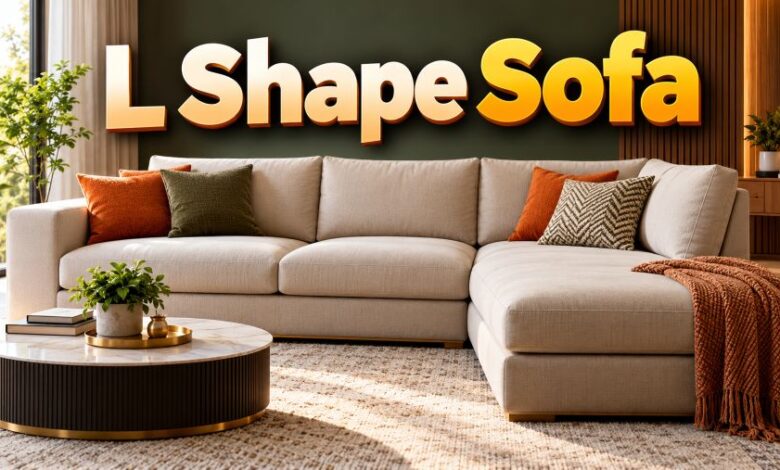
Introduction
An L shape sofa can change a room. It gives people more seating space. It also creates a cosy sitting area.
Some families want extra seats. Others need a comfortable TV spot. A corner sofa can handle both.
But choosing one takes some planning. Size matters more than appearance alone. The wrong shape can block walkways.
Here is what you should know. From materials to room measurements, this guide covers the main details.
Quick Facts About L Shape Sofas
| Feature | Details |
|---|---|
| Furniture Type | Living room seating |
| Common Names | L-shaped sofa, corner sofa, sectional sofa |
| Main Shape | Two sections forming an L |
| Common Seating Capacity | 3–7 people, depending on the model |
| Popular Types | Corner, chaise, modular, sleeper, recliner |
| Upholstery Options | Fabric, velvet, leather, microfiber, chenille |
| Common Frame Materials | Wood, engineered wood, metal |
| Suitable Rooms | Living rooms, TV lounges, apartments |
| Additional Features | Storage, reclining seats, sofa beds |
| Available Sizes | Compact, medium, large, custom |
| Main Buying Factors | Dimensions, comfort, fabric, construction |
What Is an L Shape Sofa?
An L-shaped sofa forms a right angle. Two seating sections create its shape.
One side is usually longer. The other forms the shorter return. Some designs have equally long sides.
People often call these corner sofas. You may also hear sectional couch.
There is one useful difference, though.
A sectional normally has connected furniture sections. An L-shaped sofa describes the furniture’s shape. Many models fit both descriptions.
The design can sit against walls. It can also stand independently. This makes it useful for different layouts.
Different Types of L-Shaped Sofas
Not every corner sofa looks alike. The main types serve different needs.
Traditional Corner Sofa
This design has two seating runs. Both usually provide back support.
It works well for group seating. Families can sit facing different directions.
Larger designs need more floor space. Measure both sides before ordering.
Chaise L-Shaped Sofa
A chaise extends one seat forward. It supports your legs while relaxing.
This design suits TV lounges. It can also fit smaller rooms.
The extended section usually lacks back support along its outer side.
Modular Corner Sofa
Modular sofas have separate connected units. Some units can move around.
You can change certain layouts. You may even add more sections.
Still, check the actual product. Not every modular range supports every arrangement.
L-Shaped Sofa Bed
Some corner sofas become beds. They use pull-out or folding mechanisms.
This can help with overnight guests. It saves space in multi-purpose rooms.
Check the sleeping surface dimensions first. Also, test the opening mechanism.
Recliner L-Shaped Sofa
Reclining models offer adjustable seating positions. Some work through electric controls.
Others use manual reclining mechanisms. Certain models include adjustable headrests.
They need enough operating space. Always measure with seats fully extended.
L-Shaped Sofa With Storage
Storage models include hidden compartments. Some have lift-up chaise sections.
These can hold blankets and cushions. But storage capacity varies between models.
Check how the compartment opens. Furniture nearby may restrict access.
Left-Hand vs Right-Hand L-Shaped Sofa
This detail causes plenty of confusion.
Stand facing the sofa first. Now check which side extends outward.
For many chaise sofas, a left-hand design has its chaise on your left. A right-hand design places it on your right.
But manufacturers use different naming systems.
Some descriptions refer to arm positions. Others describe the longer seating section.
So always check the product diagram. Do this before placing an order.
A reversible chaise provides another option. Certain models let you switch sides.
That can help when moving home. It also makes rearranging furniture easier.
L Shape Sofa Sizes and Dimensions
There is no fixed universal size. Every manufacturer uses different measurements.
A compact design may suit apartments. Larger models suit spacious living areas.
According to Wayfair’s sectional measuring guidance, standard sectionals commonly measure around 90–109 inches wide. Other configurations can be considerably larger.
Many sectional chaise sections measure around 60–72 inches long.
These are general reference figures. Your chosen sofa may differ.
Before buying, measure these areas:
- Total sofa width
- Length of both seating sections
- Full depth of the chaise
- Seat height and depth
- Backrest height
- Doorway and hallway width
- Available walking space
Wayfair recommends approximately 30–36 inches of clearance for comfortable walking routes.
A practical trick works well here.
Mark the sofa footprint using tape. Then walk around the marked area.
Can doors open properly? Is the coffee table too close?
These small checks prevent expensive mistakes.
Best Materials for an L-Shaped Sofa
Fabric choice affects everyday comfort. It also changes cleaning requirements.
Polyester Fabric
Polyester comes in many finishes. It is common in upholstered furniture.
Some versions resist everyday wear well. Still, fabric quality varies considerably.
Check the weave and care label.
Velvet
Velvet has a soft surface. It gives furniture a rich appearance.
Some velvet coverings show pressure marks. Certain versions need specialist cleaning.
Choose it after checking maintenance instructions.
Genuine Leather
Leather has a distinctive natural finish. Many surfaces can be wiped clean.
But leather requires suitable care products. Sharp objects can leave visible scratches.
Quality and leather type affect performance.
Microfiber
Microfiber often feels smooth and soft. Many versions handle everyday use well.
Cleaning depends on the fabric treatment. Always follow its specific cleaning code.
Linen and Cotton Blends
These fabrics offer a relaxed appearance. They can feel comfortable and breathable.
Some crease or absorb spills easily. Fabric blends may behave differently.
Chenille and Bouclé
These materials offer noticeable surface texture. Both can look attractive in living rooms.
However, some constructions snag easily. Pets may pull at loose loops.
Ask about durability before purchasing.
What Makes a Good Sofa Frame?
The covering only tells part of the story.
Look beneath the cushions.
A sofa needs dependable internal support. Frames commonly use wood or engineered materials.
Better construction usually includes secure joints. Strong corner connections also matter.
Next, check the seat suspension.
Many sofas use springs or webbing. The quality of installation affects support.
Now consider the cushion filling.
Foam cushions come in different densities. Some feel firm and supportive. Others allow deeper sinking.
Feather and fibre fillings feel different. They may need regular plumping.
Try sitting for several minutes. Check your back and leg position.
Comfort is personal, after all.
How to Choose the Right Design
Start with your available space. Then think about daily activities.
A small apartment needs careful planning. A huge sectional might overwhelm it.
For compact rooms, consider a chaise sofa. It provides extended leg support.
For larger families, consider more seating. A full corner configuration may work.
If you frequently rearrange rooms, try modular furniture.
Choose your sofa around actual needs. Avoid buying solely for its appearance.
Popular Colours and Styles
Colour changes how furniture feels visually.
Beige and Cream
These colours create a lighter appearance. They pair with many interior finishes.
However, visible spills need attention.
Grey
Grey works with different room styles. Light grey can feel soft.
Charcoal gives a stronger visual contrast.
Brown and Tan
These colours suit natural-looking interiors. They pair well with wooden furniture.
Tan leather offers a distinctive finish.
Green and Blue
Green creates a noticeable furniture feature. Navy gives rooms a deeper colour.
Both work with neutral surrounding walls.
Black
Black can look sharp and simple. It suits certain contemporary interiors.
But dust and lint may show.
Choose colours with your room lighting. Fabric samples can help considerably.
Where Should You Place an L-Shaped Sofa?
Placement affects comfort and movement.
Against two walls: This arrangement makes use of a room corner. It may leave more central space.
Facing the television: Position the main seating toward the screen. Keep viewing angles comfortable.
In an open-plan room: The sofa can separate sitting and dining areas. This creates a clearer furniture arrangement.
Near a window: Natural light can brighten the space. Avoid prolonged direct sunlight on sensitive upholstery.
In the room centre: Larger rooms may allow floating furniture. Leave clear routes around the seating.
Keep the layout practical. People should move without squeezing past furniture.
Advantages of an L Shape Sofa
The design offers several useful benefits.
More shared seating: Larger models can seat family members and guests in one arrangement.
Corner placement: The shape can fit naturally against adjoining walls.
Comfortable lounging: Chaise designs allow extended leg support.
Flexible choices: Some models offer storage, reclining or sleeping functions.
Room separation: A sectional can define a sitting area without adding a wall.
These benefits depend on the model. A sofa must suit its room.
Disadvantages You Should Know
L-shaped sofas also have limitations.
Large models occupy considerable floor space. Fixed designs restrict furniture arrangements.
Delivery can become difficult. Narrow stairs may prevent easy access.
Some corner seats feel less practical. Very deep cushions may not suit everyone.
Certain materials need careful maintenance. Custom orders may have restricted return terms.
Check these issues before purchasing. It is easier than fixing them later.
L Shape Sofa Price and Cost
There is no single standard price.
The cost depends on several factors. Size is one important factor.
Materials also affect the price. Genuine leather often costs more than basic fabric options.
Frame construction can change the cost. Reclining mechanisms may increase it further.
Delivery and assembly also deserve attention.
Compare complete product specifications, not pictures. A lower-priced sofa may use different materials.
Ask what the purchase includes.
Does the retailer include delivery? Are additional cushions included? What does the warranty actually cover?
For the actual price, check current retailer listings in your country.
How to Clean an L-Shaped Sofa
Regular maintenance helps preserve its appearance.
Start by removing loose dust. Vacuum upholstery using a suitable attachment.
Clean around the cushion edges. Dirt often collects in these gaps.
Check the manufacturer’s care label first.
Common upholstery codes include:
| Code | Cleaning Guidance |
|---|---|
| W | Suitable water-based upholstery cleaner |
| S | Approved water-free cleaning solvent |
| W-S | Suitable water-based or solvent method |
| X | Vacuum or brush only |
Do not assume covers are washable. Even removable covers may need specialist care.
Blot spills rather than rubbing aggressively. Test approved cleaners on hidden areas.
Rotate cushions when the design allows. This can distribute everyday wear.
Common Mistakes When Buying
A good sofa needs more than looks.
Some people ignore the full dimensions. Others forget the delivery route.
Another mistake involves chaise orientation. Choosing the wrong side affects placement.
People also overlook seat depth. A beautiful sofa may feel uncomfortable.
Cleaning requirements deserve attention too.
Before paying, check these points:
- Confirm the exact measurements.
- Check the left or right orientation.
- Measure every delivery entrance.
- Test the seating comfort.
- Ask about frame construction.
- Read the upholstery care label.
- Check the warranty terms.
- Review the return policy.
A few minutes of checking helps. It can prevent a costly purchase error.
L-Shaped Sofa vs Regular Sofa
Both options have their place.
| Feature | L-Shaped Sofa | Regular Sofa |
|---|---|---|
| Shape | Two connected seating directions | Usually one straight section |
| Seating | Varies, often accommodates groups | Depends on model size |
| Floor Space | Larger footprint in many designs | Often easier to place |
| Lounging | Chaise options available | Depends on seat depth and features |
| Rearranging | Limited for fixed models | Often easier to move |
| Small Rooms | Compact models may work | Often a practical option |
| Extra Features | Storage, sleeper, modular options | Similar features available on selected models |
Choose based on the room itself. Neither design suits every home.
Final Thought
An L shape sofa can be useful. It gives families room to relax.
But buying the right one matters.
Start with the room measurements. Choose a shape that fits. Then check the materials and support.
Think about cleaning and daily use. Test the cushions whenever possible.
A well-chosen sofa should feel comfortable. It should also leave room to move.
Good furniture fits real life.
Frequently Asked Questions
1. Is an L shape sofa good for small rooms?
Yes, some compact models fit smaller rooms. Measure the full footprint before buying. A chaise design may be practical.
2. What is the difference between a corner sofa and an L-shaped sofa?
The terms often describe similar furniture. Both can have an L formation. A sectional usually has connected sections.
3. Which fabric is best for everyday use?
Durable, easy-care upholstery is worth considering. Polyester blends and microfiber are common options. Check the specific fabric’s care instructions.
4. Can an L-shaped sofa become a bed?
Yes, certain models include sleeper mechanisms. Standard corner sofas may not convert. Check the product description carefully.
5. How do I choose left or right?
Stand in front of the sofa. Check the manufacturer’s orientation diagram. Naming rules can vary between designs.
6. Which colour is best for an L-shaped sofa?
That depends on your room. Beige, grey and brown are versatile choices. Consider light exposure and cleaning needs.
7. How many people can sit on an L-shaped sofa?
It depends on its actual dimensions. Compact models may seat three people. Larger designs can accommodate more.
8. Are modular L-shaped sofas worth buying?
They suit homes needing flexible arrangements. Some let you change their configuration. Check the connector system and available modules.


