Small Garden Ideas: Transform Your Tiny Outdoor Space into a Beautiful Oasis
Discover expert tips, creative designs, and proven strategies to turn even the smallest garden into a lush, functional, and eye-catching retreat.

Introduction
Creating a stunning outdoor space doesn’t require acres of land. With the right small garden ideas, you can transform even the tiniest yard, balcony, or patio into a relaxing and functional green space. From small space gardening to vertical gardens and clever container gardening, small gardens offer endless possibilities to express your creativity.
Whether you live in the city or the suburbs, limited space doesn’t mean limited beauty. By carefully selecting plants, designing walkways, and using smart compact garden design techniques, you can make your garden appear larger while maximizing every inch of available space.
Why Small Gardens Matter
A well-designed small backyard garden brings both aesthetic and practical benefits. It provides a peaceful escape from daily stress and improves air quality while supporting wildlife like pollinators and birds.
Small gardens are also cost-effective and easier to maintain. You don’t need a large budget to create a stunning space; instead, focus on low-maintenance plants, efficient watering systems, and multifunctional furniture to save time and resources.
Quick Fact
| Feature | Details |
|---|---|
| Ideal Garden Size | 50-200 square feet |
| Best Plant Types | Compact, drought-tolerant, edible, perennial |
| Key Design Style | Vertical, minimalistic, layered planting |
| Maintenance Level | Low to medium |
| Budget Range | Affordable to moderate |
| Purpose | Relaxation, food production, wildlife habitat |
Smart Layout and Design Principles
Planning Your Small Garden Layout
Start by measuring your available space and observing sun and shade patterns throughout the day. Consider zoning garden space into distinct areas for seating, planting, and pathways.
A well-thought-out garden layout helps prevent clutter while ensuring every feature serves a purpose. Use narrow borders or pocket gardens to add depth and make your outdoor area appear more spacious.
Embrace Vertical Gardening
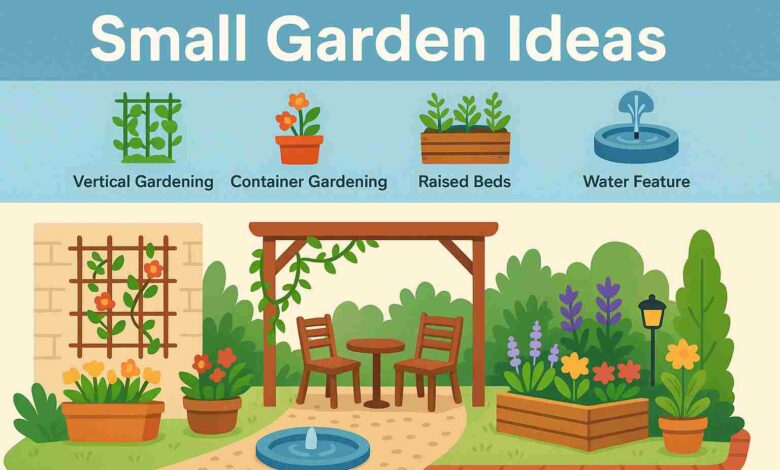
When horizontal space is limited, go vertical. Vertical planting with trellises, green walls, or hanging planters maximizes growth while saving ground space.
Climbers and vines add beauty and privacy to fences or balcony railings, creating a lush and layered look without overwhelming the area.
Choosing the Right Plants
Low-Maintenance and Compact Plants
Opt for low maintenance garden plants like perennial plants or drought-tolerant varieties to reduce care needs. Compact plants such as dwarf trees, compact fruit, and fast-growing plants are ideal for small gardens.
For seasonal interest, choose repeat flowering plants and fragrant flowers to keep your garden vibrant and aromatic year-round.
Edible Gardening in Small Spaces
Even the smallest gardens can be productive. Try container vegetable gardens, herbs, or microgreens for fresh produce right outside your door.
Raised beds and tiered planting systems are perfect for growing vegetables in tight spaces while keeping soil organized and fertile.
Hardscape and Structures
Paving, Walkways, and Borders
Pathways like stepping stones, gravel surfaces, and light coloured paving create visual flow and guide movement through your garden.
Use edging and walkways to define planting areas and maintain a neat, organized look. Borders with varying heights add dimension and structure.
Adding Focal Points and Features
Introduce garden focal points like sculptures, pots, or even a small water feature to draw attention and create a sense of balance.
Consider pergola features or compact sheds for storage while doubling as shaded seating areas.
Furniture and Functionality
Multifunctional Furniture Choices
When space is at a premium, choose multifunctional furniture such as storage benches or folding chairs that can be tucked away when not in use.
Compact seating areas make your garden feel cozy and inviting without overcrowding the layout.
Lighting for Ambiance
Proper lighting extends garden usability into the evening. Use ambient garden lighting, solar lights, or string lights to highlight pathways and create a magical nighttime atmosphere.
Lighting also enhances safety and draws attention to decorative features.
Conclusion
Transforming a small space into a thriving, beautiful garden is entirely possible with the right strategy. By combining vertical gardens, smart layouts, low-maintenance landscaping, and carefully chosen plants, you can create a vibrant oasis right outside your door.
Remember, even the tiniest balcony or courtyard has the potential to become a green sanctuary. With thoughtful design and compact garden design principles, your dream garden is closer than you think.
Frequently Asked Questions (FAQ)
What are the best plants for small gardens?
Compact plants like dwarf fruit trees, perennial plants, and low maintenance garden plants are perfect. Consider fragrant flowers or edible herbs to add both beauty and function.
How can I make a small garden look bigger?
Use vertical planting, light-colored paving, and mirrors to create the illusion of more space. Avoid overcrowding and keep pathways clear.
Can I grow vegetables in a small garden?
Yes, you can grow vegetables in containers, raised beds, or tiered planting systems. Start with fast-growing crops like lettuce, spinach, and herbs.
How do I maintain a small garden with limited time?
Choose drought-tolerant and perennial plants, automate watering systems, and use low-maintenance landscaping techniques to reduce workload.
What are some budget-friendly small garden ideas?
Re-purpose old furniture as planters, use inexpensive gravel for pathways, and focus on container gardening with affordable plants.