How to Stop Condensation on Windows: 4 Powerful Ways to Prevent Fogging and Moisture Damage
Discover Proven Methods to Reduce Window Condensation, Improve Indoor Air Quality, and Protect Your Home from Moisture Problems

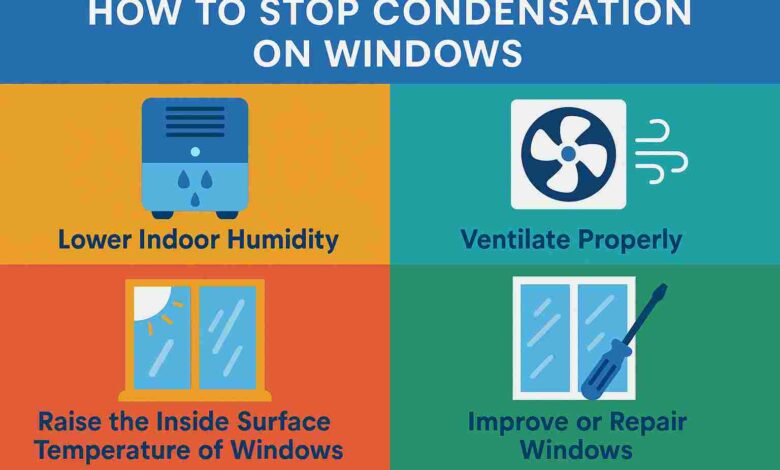
Table of Contents
ToggleIntroduction
Condensation on windows is a common problem many homeowners face, especially during colder months. If you have ever noticed foggy windows, water droplets, or even mould growth around your window frames, you are dealing with window condensation. This issue occurs when warm, moist air inside the home comes into contact with a cold glass surface, causing water vapor to turn into liquid.
Ignoring condensation on windows can lead to serious issues like mould growth, mildew, wood rot, and damage to window frames. It also impacts indoor air quality and overall comfort. In this guide, we will explain how to stop condensation on windows, discuss its causes, and share actionable steps to prevent it permanently.
Quick Fact
| Factor | Solution |
|---|---|
| High Humidity | Use dehumidifier, ventilation fans, avoid drying laundry indoors |
| Poor Ventilation | Install mechanical ventilation, open windows for cross ventilation |
| Cold Glass Surfaces | Upgrade to double glazing, use window insulation kits |
| Seal Failure | Repair or replace windows to stop condensation between panes |
Understanding Window Condensation
What Is Window Condensation?
Window condensation happens when indoor moisture levels are too high and your windows are cooler than the room’s air. This creates a dew point, leading to visible water droplets on the glass. It can occur on the interior condensation side, exterior condensation, or even between window panes if there is a seal failure.
Common Causes of Condensation on Windows
-
High indoor humidity: Activities like cooking, showering, and drying clothes indoors release moisture.
-
Poor ventilation: Lack of proper air circulation traps moisture in your home.
-
Cold windows and frames: Insufficient thermal insulation or single-pane windows cause cold surfaces.
-
Leaky windows: Drafty windows, cracks, or air leakage around frames allow cold air to enter.
Why It’s Important to Stop Condensation
Ignoring condensation problems can have negative effects:
-
Structural damage: Excess moisture leads to wood rot, peeling paint, and damaged window sills.
-
Health risks: Mould growth and mildew affect air quality, triggering allergies and respiratory problems.
-
Energy loss: Cold, drafty windows reduce energy efficiency, increasing heating costs.
-
Reduced comfort: Foggy or misty windows block sunlight and create a cold, damp atmosphere.
How to Stop Condensation on Windows
Reduce Indoor Humidity
Keeping indoor humidity balanced is key to condensation prevention.
-
Use dehumidifiers or portable dehumidifiers to remove excess moisture.
-
Run bathroom exhaust fans and kitchen exhaust hoods when cooking or showering.
-
Avoid drying laundry indoors or keep it in well-ventilated areas.
-
Place moisture absorbers or silica gel near problem windows to soak up extra moisture.
Improve Ventilation
Proper air circulation helps reduce moisture buildup on windows.
-
Open windows regularly for cross ventilation to allow fresh air exchange.
-
Install whole house ventilation or mechanical ventilation systems like HRV systems or ERV systems.
-
Keep furniture and wardrobes slightly away from walls to prevent airflow blockage.
-
Practice shock ventilation, opening windows wide for a few minutes to quickly replace humid air.
Enhance Window Insulation
Upgrade to Energy-Efficient Windows
-
Replace single-pane windows with double glazing or triple glazing for better thermal performance.
-
Choose windows with low-E glass coatings and argon gas fill for added insulation.
-
Use warm edge spacers to reduce heat loss prevention at window edges.
Weatherproof and Seal Existing Windows
-
Apply weather stripping or caulking windows to block drafts.
-
Install window insulation kits as a temporary solution.
-
Regularly check for seal failure or leaks around window frames and fix them promptly.
Maintain Proper Indoor Temperature
Maintaining a balanced indoor temperature helps prevent window fogging.
-
Use consistent home heating to keep window surface temperature above the dew point.
-
Avoid extreme temperature differences between rooms to reduce winter condensation.
-
Keep curtains open during the day to let sunlight naturally warm the glass.
Daily Habits to Prevent Condensation
-
Wipe condensation off windows daily to prevent mould growth.
-
Keep houseplants moisture levels under control or move them away from windows.
-
Close bathroom and kitchen doors while cooking or showering to contain steam.
-
Regularly clean fogging windows to avoid dirt and moisture buildup.
Conclusion
Condensation on windows may seem like a minor issue, but it has serious consequences for your home and health. By reducing indoor humidity, improving ventilation, upgrading window insulation, and adopting smart daily habits, you can prevent moisture buildup on windows and maintain a comfortable living space.
Taking proactive steps not only prevents mould growth and structural damage but also boosts your home’s energy efficiency and overall value. Addressing condensation issues today will save you money and stress in the long run.
FAQ
1. Why is there condensation between window panes?
This usually indicates a seal failure, which allows moisture to get trapped between panes. The best solution is to replace the window or have it professionally repaired.
2. Does using a dehumidifier stop condensation completely?
A dehumidifier significantly reduces indoor moisture levels, but it works best when combined with proper ventilation and window insulation.
3. Can houseplants cause window condensation?
Yes, excessive houseplants moisture can increase humidity, contributing to condensation on glass. Keep plants in well-ventilated areas.
4. Is exterior condensation a problem?
No, exterior condensation is usually harmless and occurs when warm outdoor air meets a cooler window surface. It often happens on energy-efficient windows.
5. How do I measure indoor humidity?
Use a hygrometer or humidity sensor. Aim to keep indoor humidity between 30–50% to prevent condensation problems.